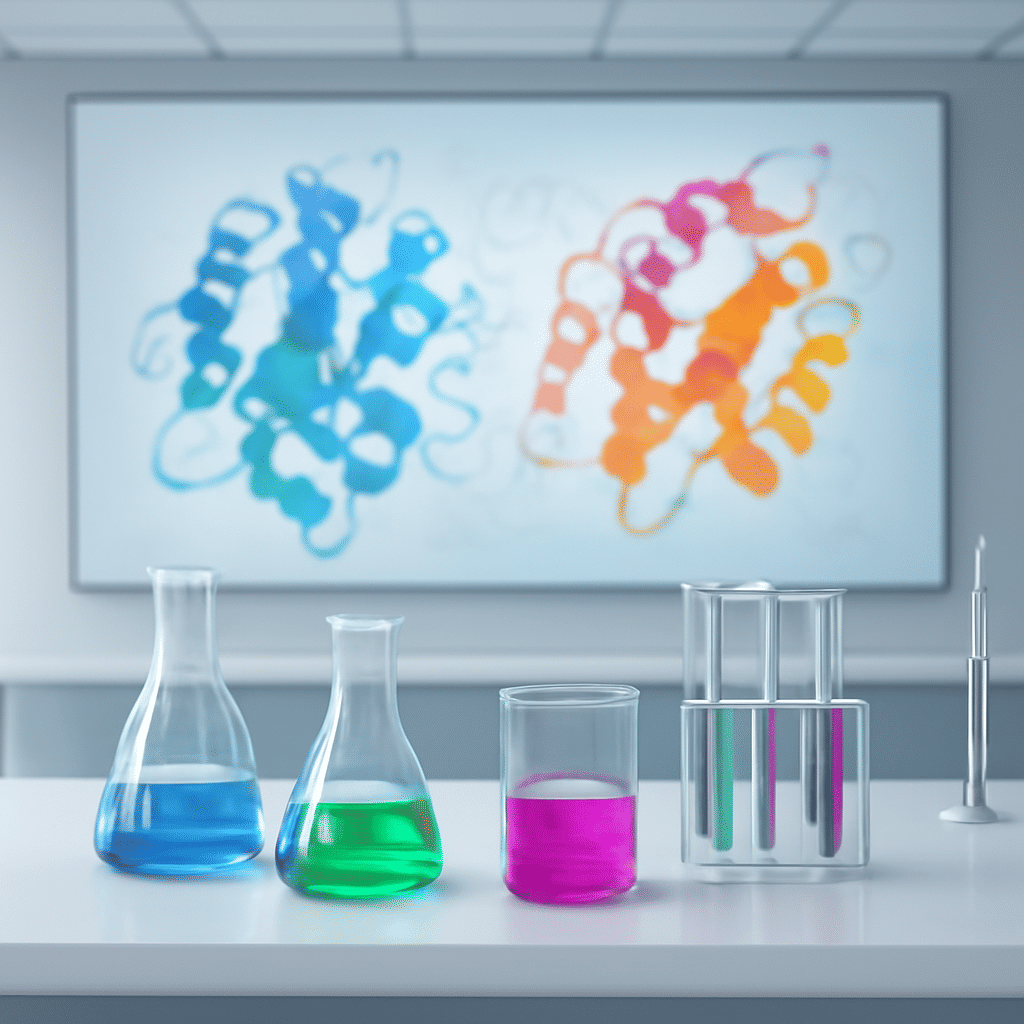
In recent years, the field of protein synthesis has witnessed remarkable innovations, driving transformative advances in drug discovery and biotechnology. As research and development intensify in these sectors, the need for efficient and scalable protein synthesis methods has become increasingly crucial. These innovations are not only enhancing our ability to understand complex biological systems but also paving the way for new therapeutic discoveries and industrial applications.
One of the most significant advancements in protein synthesis is the development of cell-free protein synthesis (CFPS) systems. Unlike traditional in vivo methods that rely on living cells to produce proteins, CFPS allows for protein production in a controlled, cell-free environment. This approach offers several advantages, including faster production times, minimized contamination risks, and the ability to synthesize proteins that would otherwise be toxic to living cells. As a result, CFPS is rapidly gaining traction in pharmaceutical research and development, where timely and efficient protein production is critical.
Another breakthrough is the use of synthetic biology and genetic engineering techniques to manipulate biological systems for desired outcomes. By redesigning natural biosynthetic pathways and constructing artificial ones, scientists can now synthesize proteins with enhanced functionalities or entirely novel properties. These engineered proteins hold immense potential for developing advanced therapeutics, such as tailored enzymes for disease treatments or novel biomaterials for regenerative medicine.
Moreover, advancements in computational biology and machine learning are revolutionizing protein synthesis by enabling precise prediction and modeling of protein structures. These technologies allow scientists to design proteins with increased stability, efficacy, and specificity, significantly reducing the trial-and-error aspect of protein engineering. This computational prowess accelerates the drug discovery process, as researchers can swiftly identify potential drug candidates and optimize them for clinical use.
The integration of automation and robotics into protein synthesis workflows has also played a pivotal role in enhancing efficiency and scalability. Automated systems reduce human error and streamline repetitive processes, such as liquid handling and sample processing, thus speeding up the production and analysis pipeline. This increased throughput is particularly beneficial for large-scale screening of protein variants, aiding the rapid identification of the most promising therapeutic leads.
In addition to these technological advances, sustainable practices in protein synthesis are garnering greater attention. The implementation of greener methodologies, such as biocatalysis and the use of renewable resources, is helping to reduce the environmental footprint of protein production. These eco-friendly approaches are essential as the demand for biotechnological applications continues to rise, ensuring that advancements in protein synthesis are aligned with global sustainability goals.
In conclusion, the innovative strides in protein synthesis are reshaping the landscape of drug discovery and biotechnology. By leveraging cell-free systems, synthetic biology, computational tools, automation, and sustainable practices, researchers are overcoming previous limitations and unlocking new possibilities. These advancements are not only expediting the development of next-generation therapeutics but also broadening the scope of applications in various industries, from agriculture to materials science. As these technologies continue to evolve, they promise to lead a new era of scientific and medical breakthroughs, fundamentally transforming the ways we approach health and disease management.